
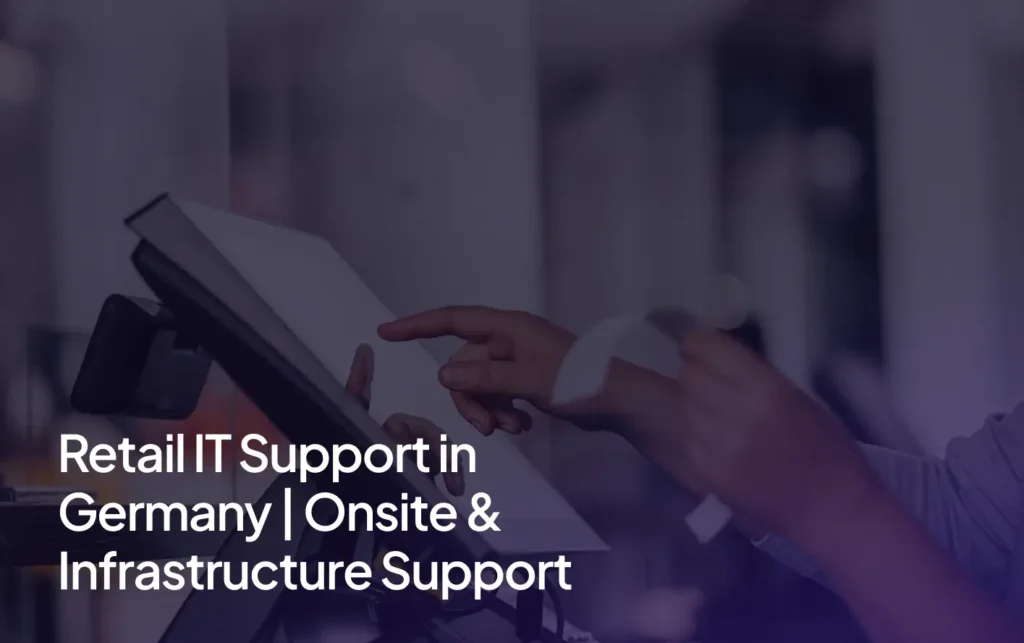
Retail stores depend on technology throughout the working day. From point-of-sale (POS) systems and payment terminals to store networks, employee devices, and back-office systems, even a small IT problem can interrupt normal operations.
For retailers operating across Germany, managing these systems becomes more challenging as the number of stores, devices, and locations increases. A network problem in one branch, a faulty workstation, or a hardware issue at checkout can require immediate attention from someone who understands the physical IT environment.
Retail IT support in Germany helps businesses maintain reliable store technology, resolve onsite hardware issues, and coordinate IT infrastructure across multiple locations.
AleefTechs provides onsite IT support, network support, desktop and deskside support, and datacenter support for businesses across Germany and the DACH region. This guide explains the common IT challenges retailers face, how onsite engineering can help, and what to consider when choosing a retail IT support partner.
Why Retail Businesses Need Reliable IT Support
Modern retail operations rely on several connected systems. A store may use POS terminals for transactions, network equipment for connectivity, computers for administration, and connected devices for inventory and day-to-day operations.
When one part of that environment stops working, other activities can be affected.
Consider a store where employees cannot connect to the internal network. The problem might involve a wireless access point, a switch, cabling, or another part of the network infrastructure. Without proper troubleshooting, employees may struggle to access the systems they need.
A faulty workstation can create similar problems for staff handling stock, administration, or customer service.
Retailers therefore need an IT support process that covers both remote troubleshooting and physical work at the store when necessary.
Common IT problems in retail stores
Retail IT teams regularly need to manage issues such as:
- POS workstations and peripheral devices that stop working.
- Network connectivity problems affecting store operations.
- Faulty routers, switches, wireless access points, or cabling.
- Desktop and laptop hardware failures.
- New equipment that needs installation or configuration.
- Network upgrades across existing retail locations.
- Infrastructure problems that require physical inspection.
- Hardware replacements that must be coordinated around store operations.
The right response depends on the cause of the problem. Remote support may resolve a software or configuration issue, while damaged hardware, cabling faults, or equipment installation may require an onsite engineer.
What Is Onsite Retail IT Support?
Onsite retail IT support involves technical work performed at the store or business location rather than entirely through a remote connection.
An onsite engineer can inspect equipment, install hardware, check physical connections, replace supported components, and help troubleshoot infrastructure problems that cannot be resolved remotely.
This service is particularly useful when a retailer operates several branches and cannot send its internal IT team to every location whenever a physical issue occurs.
POS and checkout equipment support
Point-of-sale systems sit at the centre of many retail transactions. Depending on the store’s setup, the checkout environment may include POS terminals, receipt printers, barcode scanners, cash drawers, payment terminals, and network connections.
When a device fails, the first step is to identify whether the problem comes from the hardware, connectivity, configuration, or another connected system.
Onsite support can help inspect physical connections, diagnose hardware issues, replace supported components, and coordinate further troubleshooting with the relevant software or payment provider.
Retailers should also maintain clear escalation procedures for transaction-processing or payment-system outages. An onsite engineer may resolve the physical infrastructure problem, but issues involving payment authorization or a third-party application may require the relevant provider.
Hardware installation and replacement
Opening a new store or upgrading an existing location often involves more than delivering equipment.
Devices may need to be unpacked, installed, connected, configured, tested, and documented before employees can use them.
An onsite IT engineer can support these activities and help confirm that equipment is physically connected and ready for the next stage of deployment.
For multi-store rollouts, a consistent installation checklist helps teams apply the same process at each location and record any problems that need follow-up.
Desktop and deskside support
Retail employees may rely on desktop computers, laptops, and other workplace devices for administration, inventory tasks, reporting, and communication.
When a device develops a hardware fault or a peripheral stops working, employees may lose access to the tools they need.
Desktop and deskside support helps diagnose these problems, carry out appropriate physical troubleshooting, and coordinate repairs or replacements.
The aim is to restore normal working conditions while keeping the response aligned with the retailer’s support procedures.
Network Support for Retail Stores Across Germany
A reliable network connects the systems that retailers use every day. It supports internal applications, employee devices, store communications, and other connected services.
Network problems can be difficult to diagnose because the cause may be physical, configuration-related, or connected to another service.
For example, a store experiencing intermittent connectivity might have a faulty cable, an unstable network device, a wireless coverage problem, or an issue with its internet service.
Replacing equipment without identifying the cause can lead to repeated problems.
Network infrastructure services
Retail network support may include:
- Router and network switch installation.
- Wireless access point installation and troubleshooting.
- Structured cabling checks and physical connectivity work.
- Network hardware replacement.
- Physical inspection of network equipment.
- Support during store network upgrades.
- Coordination with internal IT teams and network providers.
The exact work depends on the store’s infrastructure, access requirements, and technical environment.
For retailers operating multiple branches, consistent network documentation is particularly valuable. Recording equipment locations, connections, and completed work makes future troubleshooting easier.
IT Infrastructure Support for Multi-Location Retailers
Managing IT across one store is different from supporting dozens of branches across Germany.
A central IT team may handle monitoring, administration, and remote troubleshooting, but physical tasks still need someone at the relevant location.
These tasks can include installing network equipment, replacing a workstation, inspecting a faulty connection, or helping prepare a new retail site for opening.
Without a coordinated support model, internal teams may spend considerable time arranging site visits and communicating with different service providers.
How onsite engineering supports multiple stores
A structured onsite support process typically includes four steps.
1. Define the issue. Record the affected location, equipment, symptoms, business impact, and any troubleshooting already completed.
2. Assign the appropriate technical resource. Determine whether the problem requires an onsite visit, remote support, or escalation to a specialist provider.
3. Complete and document the work. Record the equipment inspected, actions taken, parts replaced where applicable, and any remaining issues.
4. Confirm the next steps. Update the internal IT team and escalate unresolved application, network-provider, or payment-system problems to the appropriate party.
This approach gives retailers a clearer record of what happened at each branch and helps internal teams coordinate support more effectively.
For businesses without a large internal field-engineering team, an external IT support partner can provide additional technical capacity when physical work is required.
Keeping Retail Payment Systems Secure
Retail payment environments require careful attention because they handle sensitive transaction information.
The PCI Security Standards Council maintains the Payment Card Industry Data Security Standard (PCI DSS), which establishes technical and operational requirements designed to protect payment account data. The applicable requirements depend on the systems and activities involved in processing, storing, or transmitting that data.
For retailers, payment security is not simply a matter of having a working terminal. The connected infrastructure, device configuration, access controls, and procedures also matter.
Good IT support practices can contribute to a more reliable environment by helping businesses:
- Install and maintain hardware according to approved procedures.
- Keep an accurate record of infrastructure changes.
- Escalate suspected security issues through the correct channels.
- Coordinate equipment replacement and configuration with authorized teams.
- Avoid unauthorized changes to payment-related equipment and connections.
Onsite IT support alone does not guarantee PCI DSS compliance. Retailers must assess their full payment environment and meet the requirements that apply to their business.
Supporting New Store Openings and Retail IT Rollouts
Opening a new store or upgrading several existing locations requires coordination between purchasing, operations, IT, and onsite technical teams.
Equipment may include POS workstations, employee computers, network switches, wireless access points, printers, and other devices required for the store’s operations.
If these items arrive before the site is ready or the installation plan is confirmed, the project can experience avoidable delays.
A more organized rollout begins with a clear equipment list, agreed technical specifications, a site-readiness check, and a schedule for installation and testing.
A practical retail IT deployment checklist
Before a store opens or an infrastructure upgrade begins, confirm that:
- The required equipment has been identified and allocated.
- The site is ready for the planned installation work.
- Network connections and equipment locations have been checked.
- Relevant technical and access requirements have been confirmed.
- Installation and configuration responsibilities are clear.
- Equipment has been tested according to the approved checklist.
- Outstanding issues have been documented and assigned.
- The internal IT team has received the relevant handover information.
The checklist should be adapted to the retailer’s own systems and operating procedures. A small store upgrade may require a simple plan, while a nationwide rollout will need more detailed coordination.
Choosing a Retail IT Support Provider in Germany
The right IT support partner should understand the practical demands of retail environments and work effectively with the retailer’s existing IT team.
Before choosing a provider, consider the following factors.
Onsite coverage
Ask which locations the provider can support, how site visits are arranged, and whether its coverage matches your store network.
Do not assume that a provider covers every German city or offers a particular response time without confirming those details.
Technical capabilities
Check whether the provider can support your actual requirements, such as network hardware installation, desktop troubleshooting, physical infrastructure work, and equipment replacement.
Payment applications and specialized retail platforms may require additional expertise from their respective vendors.
Communication and reporting
A useful support process should provide clear records of reported issues, work completed, unresolved problems, and required follow-up.
This information helps internal IT teams understand what happened at each store and avoid repeating troubleshooting steps.
Data protection and access procedures
Retail environments may involve access to business systems and sensitive operational information. A support arrangement should clearly define authorized access, confidentiality, documentation, and the handling of personal data.
Germany’s General Data Protection Regulation (GDPR) obligations depend on the roles and activities of the parties involved. Retailers should establish the appropriate contractual and operational arrangements rather than assume that a provider’s general compliance statement covers every requirement.
Ability to support changing requirements
A retailer may need help with a single hardware replacement today and a coordinated multi-store rollout later.
Choose a support model that can accommodate the expected scope of work, while confirming the provider’s actual availability, technical capabilities, and commercial terms.
How AleefTechs Supports Retail IT Operations
AleefTechs provides onsite IT support and infrastructure services for businesses across Germany and the DACH region.
For retailers that need physical technical support at their locations, the relevant services include:
Onsite IT support: Assistance with hardware installation, physical troubleshooting, maintenance tasks, and other onsite technical requirements.
Network support: Support involving network equipment, connectivity infrastructure, installation, and troubleshooting.
Desktop and deskside support: Assistance with workplace devices and hardware or software issues that affect employees.
Datacenter support: Physical infrastructure support for servers and datacenter environments where required.
Multi-location engineering support: Additional onsite technical capacity for businesses that need support at locations beyond their internal team’s immediate reach.
These services can complement an internal IT department or help managed service providers (MSPs) coordinate physical support work for their customers.
The appropriate arrangement depends on the equipment involved, location requirements, scope of work, and agreed service levels.
To discuss your requirements, visit AleefTechs or explore the onsite IT support service.
Frequently Asked Questions About Retail IT Support in Germany
What does retail IT support include?
Retail IT support can include POS hardware troubleshooting, desktop and deskside support, network equipment installation, connectivity troubleshooting, hardware replacement, and infrastructure maintenance. The exact scope depends on the provider and the retailer’s environment.
Why do retailers need onsite IT support?
Onsite IT support is useful when a problem requires physical inspection, hardware installation, cable checks, device replacement, or other work that cannot be completed remotely. It can also support new store openings and coordinated equipment rollouts.
Can an onsite IT engineer fix POS system problems?
An onsite engineer may be able to diagnose hardware, peripheral, or connectivity problems affecting a POS system. Issues involving payment authorization, retail software, or third-party services may need to be escalated to the relevant vendor.
How can retailers manage IT across multiple locations?
Retailers can standardize equipment where appropriate, maintain accurate infrastructure records, establish clear escalation procedures, and coordinate remote support with onsite engineering resources. Consistent reporting helps central IT teams track work across branches.
What should retailers look for in an IT support partner in Germany?
Retailers should assess geographic coverage, technical capabilities, reporting practices, security procedures, availability, and the provider’s ability to work with existing IT teams and vendors.
Does retail IT support guarantee PCI DSS compliance?
No. IT support can help maintain infrastructure and carry out authorized technical work, but PCI DSS compliance depends on the retailer’s overall payment environment, applicable requirements, controls, and assessment process.
Keep Your Retail Technology Ready for Business
Retail IT problems rarely happen at a convenient time. A faulty device, unstable network connection, or delayed hardware installation can create additional work for store employees and central IT teams.
A well-organized support model helps retailers identify problems, arrange the right technical response, and keep infrastructure work documented across their locations.
For retailers operating in Germany, the key is to connect remote troubleshooting, onsite engineering, network support, and deployment planning into a process that fits the business.
Need onsite IT or infrastructure support for your retail locations? Contact AleefTechs to discuss your requirements and determine whether our services are a suitable fit.

 English
 German